.png)
Understanding Different Types of Disabilities (And the Support Available)
- May 1
- 2 min read
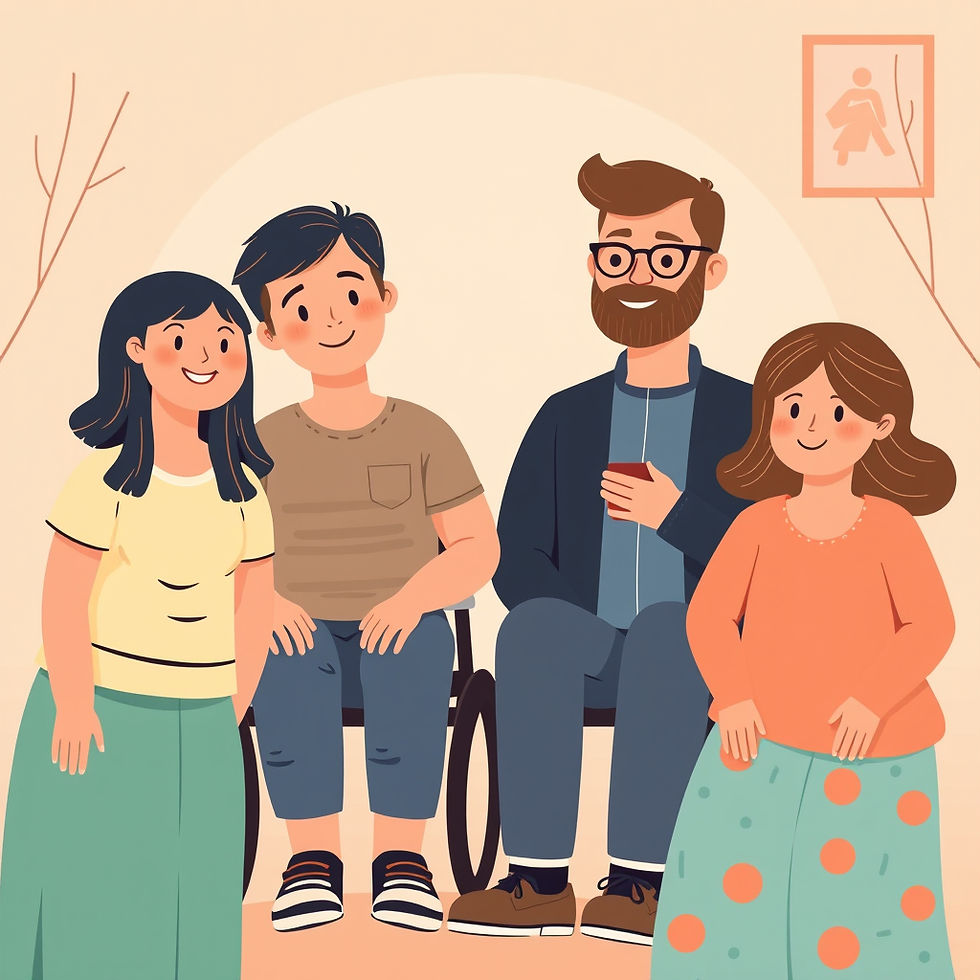
Disabilities can affect people in many different ways, and no two experiences are the same.
Understanding the different types of disabilities can help individuals and families find the right kind of support and make more informed decisions about care.
At Lvl Up Support Services in Coffs Harbour, we work with people across a wide range of support needs, providing tailored services that suit each individual’s situation.
Here is a simple guide to the main types of disabilities and the support available.
Physical Disabilities
Physical disabilities affect movement, mobility, or physical functioning.
Examples may include:
Spinal cord injuries
Cerebral palsy
Muscular dystrophy
Chronic health conditions
Support may include:
Assistance with daily living tasks
Mobility support
Help with transfers and movement
Access to equipment or home modifications
The focus is often on maintaining independence and improving safety in everyday life.
Intellectual Disabilities
Intellectual disabilities affect learning, understanding, and problem-solving abilities.
Examples may include:
Down syndrome
Developmental delays
Learning disabilities
Support may include:
Skill-building and capacity development
Assistance with daily routines
Social and communication support
Structured environments and guidance
The goal is to build independence and confidence over time.
Psychosocial Disabilities
Psychosocial disabilities relate to mental health conditions that impact daily functioning.
Examples may include:
Anxiety disorders
Depression
Schizophrenia
Bipolar disorder
Support may include:
Psychosocial recovery coaching
Counselling
Routine building and goal setting
Support with social and community engagement
At Lvl Up, this is a key area of focus, supporting both emotional wellbeing and practical daily life.
Neurological Disabilities
Neurological disabilities affect the brain and nervous system.
Examples may include:
Autism spectrum disorder
Multiple sclerosis
Acquired brain injury
Epilepsy
Support may include:
Behavioural and communication support
Daily living assistance
Structured routines
Therapy supports
Support is often tailored to the individual’s specific needs and how their condition presents.
Sensory Disabilities
Sensory disabilities affect one or more of the senses, such as vision or hearing.
Examples may include:
Vision impairment or blindness
Hearing loss or deafness
Support may include:
Assistive technology
Communication support
Environmental adjustments
Orientation and mobility training
These supports help individuals navigate their environment safely and confidently.
How Support Is Tailored to You
While disabilities are often grouped into categories, every person’s experience is unique.
Support should always be:
Person-centred
Flexible
Based on individual goals
Adapted over time as needs change
At Lvl Up Support Services, we focus on understanding the individual, not just the diagnosis.
How the NDIS Supports Different Disabilities
The NDIS provides funding based on how a disability impacts your daily life, not just the diagnosis itself.
Support may include:
Assistance with daily living
Capacity building supports
Therapy and counselling
Equipment and home modifications
Understanding what support is available can help you make the most of your plan.
Final Thoughts
There is no one-size-fits-all approach to disability support.
By understanding the different types of disabilities and the support available, you can make more informed decisions and find the right support for your needs.
Need Support in Coffs Harbour?
If you or a loved one are looking for tailored disability support or counselling, Lvl Up Support Services is here to help.
Get in touch today to learn how we can support your individual needs.



Comments